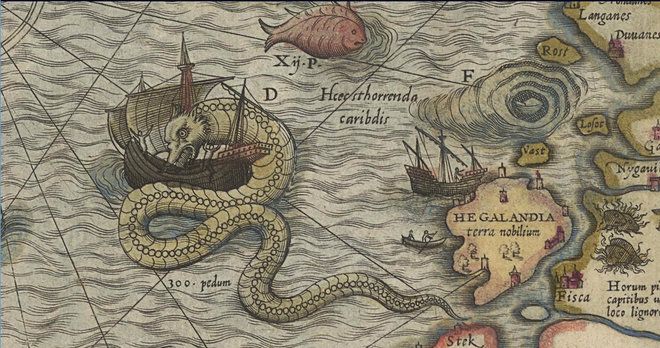
A danger looms when stating our theories and ideas clearly and concisely, when baring their logical structure and minimizing ambiguity: They become drastically easier to criticize and reduce to absurdity than nebulously or slyly stated ideas, which retain a great deal of interpretive wiggle room. I think many modern-day academics are aware of this on an intuitive level, though most confront it only in the form of a nameless anxiety when they consider expressing their theories a bit too plainly, as a jolting subconscious recognition that “here be dragons” which compels them to obfuscate the inadequacy of their ideas with increasingly pedantic, jargon-laden elaborations. The more overwrought and unproductive a field of inquiry becomes, the more likely this mentality is in play.
When an intelligent non-expert must wade through and familiarize themselves with a trash heap of ill-construed terminology then it becomes increasingly unlikely that anyone outside the field will bother to evaluate and criticize the ascendant paradigm. If the ineptitude and fruitlessness of the enterprise is kept sufficiently hidden from uninitiated intellectuals, then the likelihood of a catastrophic dismantling of some cherished theory is profoundly lessened. The disagreements within the field will almost always be minor quibbles on the details of accepted assumptions and explanations, very rarely bold and decisive blows against the orthodoxy. This is not only a problem in the so-called soft sciences. It has infected even physics, astronomy and other traditionally hard-nosed disciplines to a worrying extent.
It takes just one erudite, intelligent individual actually understanding and making clear what is being claimed to initiate the utter vitiation and destruction of half-baked theorizing masquerading as "expert knowledge." It is for this reason that academics increasingly retreat into pedantry, censorship, credentialism and dismissiveness whenever their claims are challenged. They dislike open and honest debate that might reveal the intellectual bankruptcy of their position. The combined might of a lofty degree and self-righteous hauteur has been remarkably effective at duping the masses in the previous century, but a growing segment of the population is no longer content with trusting the so-called experts. The rarity with which theories in any scientific field are expounded in a clear and falsifiable fashion, in a spirit which is open to intelligent discussion about their merits and shortcomings, or the evidence supporting them, ought to trouble any person interested in fostering genuine scientific progress. The current mentality serves only the obsequious shills that value their salary and political standing more than scientific virtue and its fruits.
The proper practice of science has great need of persons with the courage to clearly state bold ideas which could be plainly shown false, and no need whatever of the clever rogues that somehow never seem to be wrong, who always have some new feat of intellectual acrobatics at hand which makes it passably plausible that falsifying evidence was really nothing of the sort, that, as it turns out, their hypothesis never predicted such a thing after all! Not only is there no need for these charlatans, there is a dire need to minimize their stake and presence in the scientific enterprise, if the rational and virtuous functioning thereof is to remain feasible.